Top Aluminum Alloy Profiles Trends in 2026 for Global Buyers?
As we look ahead to 2026, the landscape of Aluminum Alloy Profiles is evolving significantly. This industry plays a vital role in construction, automotive, and aerospace sectors. Global buyers must remain informed on emerging trends and technologies shaping this market. The demand for lightweight, durable materials is driving innovation.
Aluminum Alloy Profiles are becoming essential for modern engineering solutions. Buyers should prioritize materials that enhance efficiency and sustainability. New alloys offer improved strength and corrosion resistance. However, the pace of change presents challenges. Understanding specifications and applications is crucial for making informed decisions.
The future also emphasizes customization. Tailored solutions can meet unique project needs. Buyers may encounter supplier inconsistencies, highlighting the importance of reliability. As trends unfold, staying updated will be key to navigating this dynamic market. Informed choices in Aluminum Alloy Profiles can lead to competitive advantages.

Emerging Trends in Aluminum Alloy Profiles for Global Buyers in 2026
The aluminum alloy profile market is poised for significant changes in 2026. According to a recent report by Market Research Future, the global aluminum alloy market will grow at a CAGR of over 6% through the next five years. Increasing demand from the automotive sector drives this growth.
Lightweight and durable materials are essential for fuel efficiency and performance improvement.
In 2026, a notable trend will be the shift toward sustainable aluminum production. Recycled aluminum accounts for up to 75% of global aluminum usage. Buyers are looking for manufacturers with established recycling practices. A focus on reducing carbon footprints will also be crucial. Companies that invest in green technologies will likely gain a competitive edge.
Emerging applications in the construction and aerospace industries are noteworthy. These sectors seek advanced profiles for their unique needs. However, challenges exist in meeting stringent quality standards. The balance between innovation and compliance will demand careful navigation from manufacturers. Buyers must be aware of these factors when choosing suppliers in the evolving market.
Market Demand Projections for Aluminum Alloys: A 2026 Forecast
The demand for aluminum alloys is expected to surge in 2026. Industries are increasingly relying on lightweight materials. This shift is driven by the push for energy efficiency and sustainability. Automotive and aerospace sectors are key players in this trend. These industries seek to reduce weight without compromising strength.
Market forecasts indicate a growing interest in high-performance alloys. Manufacturers aim to enhance durability and resistance to corrosion. Emerging applications in construction and electronics also contribute to this inflow. Companies are investing in research to optimize alloy formulations. This innovation aims to meet the rising standards of performance and reliability.
However, challenges remain. Supply chain disruptions may impact availability and pricing. Additionally, the recycling process for aluminum alloys is not fully efficient. Buyers must consider these factors when planning purchases. Understanding these market dynamics is crucial for future success.
Top Aluminum Alloy Profiles Trends in 2026 for Global Buyers
| Trends |
Market Demand (Metric Tons) |
Growth Rate (%) |
Application Areas |
| Lightweight Alloys |
1,200,000 |
5.2 |
Aerospace, Automotive |
| Corrosion-Resistant Alloys |
950,000 |
4.8 |
Marine, Construction |
| High-Strength Alloys |
800,000 |
6.0 |
Defense, Heavy Machinery |
| Recycled Aluminum Alloys |
600,000 |
7.5 |
Packaging, Consumer Goods |
| Thermal Conductivity Alloys |
550,000 |
3.9 |
Electronics, HVAC |
Innovations in Aluminum Alloy Manufacturing Techniques for 2026
Aluminum alloy manufacturing is poised for significant innovations in 2026. As sustainability becomes a priority, new techniques will emerge to reduce the environmental impact of production. Advanced recycling methods will play a pivotal role. These methods not only minimize waste but also lower energy consumption. Such changes can lead to circular economies within the industry.
Emerging technologies will enhance the properties of aluminum alloys. For instance, additive manufacturing techniques can produce complex geometries that traditional methods cannot achieve. This allows for greater design flexibility. However, there are challenges, such as ensuring material consistency and mechanical properties. The industry must address these hurdles to fully harness the potential of these innovations.
Moreover, the integration of AI and machine learning into production lines will streamline operations. Predictive analytics can optimize manufacturing processes. But this reliance on technology might raise concerns about potential job displacement. The balance between automation and skilled labor remains a critical discussion point. Thus, while innovations promise progress, they also invite reflection on their broader impacts.
Top Aluminum Alloy Profiles Trends in 2026
This chart illustrates the trends in aluminum alloy profiles anticipated for 2026. The data reflects the percentage of market interest in key attributes including recyclability, lightweighting, corrosion resistance, strength & durability, and cost efficiency.
Sustainability and Recycling Trends Affecting Aluminum Alloys in 2026
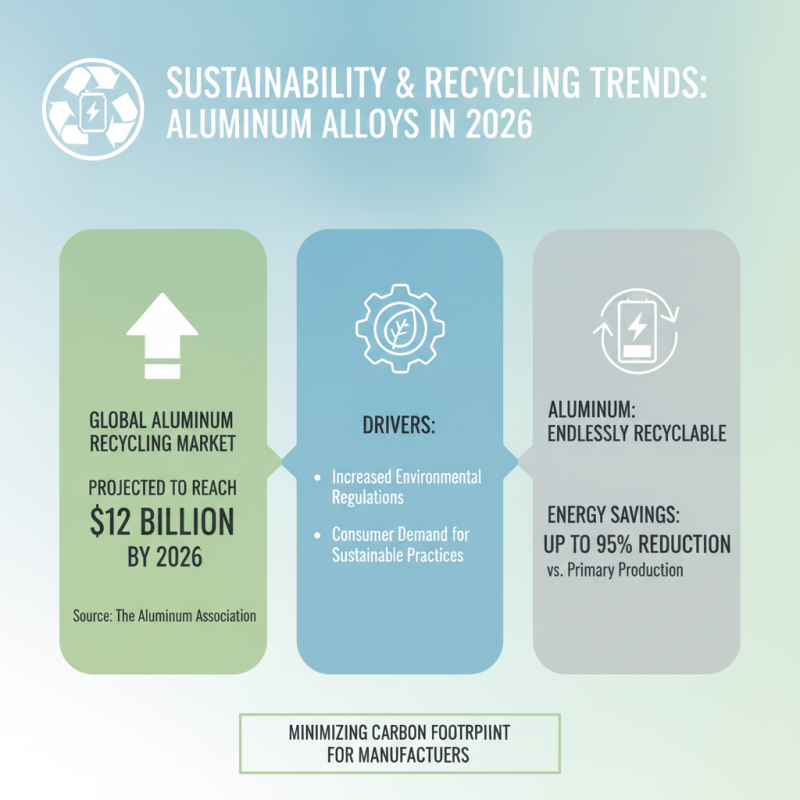
As we approach 2026, the aluminum alloy industry is witnessing a significant shift towards sustainability and recycling. According to the Aluminum Association, the global market for aluminum recycling is poised to reach $12 billion by 2026, driven by increased environmental regulations and consumer demand for sustainable practices. Aluminum is endlessly recyclable, which reduces energy consumption by up to 95% compared to primary production. This makes recycling an attractive option for manufacturers aiming to minimize their carbon footprints.
Moreover, recent studies indicate that 75% of all aluminum ever produced is still in use today. This longevity underscores the material's appeal. Industry leaders are increasingly investing in technologies that enhance recycling processes. For example, the development of efficient sorting technologies has improved the yield of scrap aluminum processing. However, challenges remain. Not all alloys are easily recyclable, and contamination can lead to lower quality materials. The need for improved recycling systems is critical as the demand for sustainable aluminum alloys continues to rise.
Market trends suggest that by 2026, the demand for aluminum alloys with high recycled content will increase significantly. Around 30% of all aluminum in automotive applications is expected to be recycled material. Yet, achieving this target requires ongoing investment in both technology and infrastructure. The transition towards sustainability in the aluminum alloy sector presents opportunities but also obstacles that need addressing to ensure a circular economy.
Key Global Markets Driving Aluminum Alloy Profile Trends in 2026
As we approach 2026, aluminum alloy profiles are witnessing significant growth in key global markets. The automotive and construction sectors are particularly driving this trend. According to a recent industry report, the global demand for aluminum profiles in these sectors is expected to increase by approximately 10% annually. This reflects the ongoing shift toward lightweight and sustainable materials.
China and the United States remain vital players. In China, the demand for aluminum in construction is surging, fueled by urbanization. The U.S. market is also evolving, driven by the automotive industry's focus on enhancing fuel efficiency. Europe is not far behind, prioritizing sustainability in its construction practices. Notably, Germany's market shows a robust increase in aluminum profile applications.
Tip: Stay updated on steel-aluminum price trends. This can influence your purchasing decisions.
Industry analysts emphasize the importance of innovation in alloy formulations. Companies are exploring advanced processing techniques and coatings to enhance durability. However, challenges like fluctuating raw material prices and environmental regulations persist. Buyers must carefully assess how these factors impact their procurement strategies.
Tip: Collaborate with suppliers on R&D. This could lead to more tailored solutions.









 wechat