Top 10 Best Aluminum Alloy Profiles for Your Projects?
In recent years, Aluminum Alloy Profiles have gained significant traction in various industries due to their versatility and durability. According to a market research report by ResearchAndMarkets, the global aluminum profiles market is projected to grow at a compound annual growth rate of 5.1% from 2022 to 2027. This growth is driven by the increasing demand for lightweight materials in automotive and construction sectors.
Aluminum alloy profiles are favored for their strength-to-weight ratio and resistance to corrosion. Notably, they account for up to 20% of material use in modern architecture. While there are numerous products available, choosing the right profile can be challenging. Factors such as alloy composition, fabrication method, and application requirements must be considered carefully.
However, it’s crucial to recognize that not all aluminum profiles are created equal. Some may underperform, leading to structural failures or increased maintenance costs. Our exploration of the top ten aluminum alloy profiles will delve into their specific features and potential shortcomings, providing a comprehensive guide for your project needs. In an industry where precision matters, understanding these factors can significantly impact your success.

Overview of Aluminum Alloy Profiles and Their Applications
Aluminum alloy profiles are essential components in various industries. They offer excellent strength-to-weight ratios and durability. The global aluminum alloy market is projected to reach $125 billion by 2027, driven by demand in automotive and construction sectors.
Profiles made of aluminum alloys are versatile. They can be found in skyscrapers, bridges, and airplanes.
The applications of these profiles extend beyond traditional uses. For instance, they are now common in renewable energy systems, like solar panel frames. Reports indicate that lightweight aluminum can improve energy efficiency by reducing load.
However, some applications still show room for improvement, especially in recycling methods. The recycling rate for aluminum alloys is around 75%, but achieving 100% remains a challenge.
Construction projects often use custom profiles tailored to specific needs. Selecting the right alloy is crucial. For example, 6061 and 6063 alloys are popular due to their extrudability. Each alloy has unique mechanical properties that can affect performance. The lack of awareness about these properties might lead to less optimal decisions. This gap highlights the need for industry education and information sharing.
Criteria for Selecting the Best Aluminum Alloy Profiles
Choosing the right aluminum alloy profile can significantly impact your project's success. The first critical criterion is the alloy's strength. Depending on your needs, you may require high tensile strength or specific weight considerations. For instance, aerospace applications often demand lighter yet stronger materials. Understand the load-bearing requirements of your specific project. This ensures you select an appropriate alloy that delivers the needed performance.
Another essential factor is corrosion resistance. Aluminum alloys can vary greatly in this aspect. Projects exposed to harsh environments require enhanced protection against rust and degradation. Often, a simple anodized finish makes a remarkable difference in longevity. However, not all finishes are created equal. Some may not offer adequate protection in maritime or industrial environments. Evaluate your project thoroughly to avoid future complications.
Cost-effectiveness is also important. Premium alloys can provide excellent performance but may stretch your budget. Sometimes, a more affordable option meets project needs without compromising safety. Weigh the long-term benefits of durability against initial costs. It’s crucial to balance quality with budget constraints. This analysis could lead to unexpected insights that enhance your approach. Careful consideration in these areas can lead to a much smoother project execution.
Top 10 Best Aluminum Alloy Profiles for Your Projects
Top 10 Aluminum Alloy Profiles for Various Project Needs
Aluminum alloy profiles are essential in various projects. Their versatility makes them a popular choice in construction, automotive, and machinery industries. Some profiles provide excellent resistance to corrosion. This is especially beneficial in outdoor applications. Others offer lightweight solutions, making them ideal for portable structures. When selecting a profile, consider the specific requirements of the project.
For structural integrity, profiles with higher tensile strength are preferred. They can support significant loads and withstand stress. In contrast, some projects require profiles that prioritize flexibility. These can adapt to dynamic forces without breaking. The balance between rigidity and flexibility can be challenging. Testing different profiles may reveal that they perform differently under various conditions.
Adjustments in design can make a significant impact. A minor change in thickness can alter the weight and durability. It’s crucial to account for these details during the design phase. Understand that not all profiles will fit every need. Experimenting with various options allows you to find the best fit. Some profiles may exceed expectations, while others may need re-evaluation. Flexibility in your choices is key.
Top 10 Aluminum Alloy Profiles for Various Project Needs
| Profile Type |
Alloy Series |
Application |
Weight (kg/m) |
Strength (MPa) |
| Square Tube |
6063 |
Construction, Framework |
1.5 |
200 |
| Flat Bar |
6061 |
Machinery, Brackets |
1.2 |
310 |
| Angle |
2024 |
Framework, Support |
2.0 |
350 |
| Round Tube |
6060 |
Construction, Piping |
1.8 |
240 |
| Channel |
6063 |
Support Structures |
2.5 |
230 |
| T-Bar |
6082 |
Framing, Reinforcement |
1.4 |
260 |
| I-Beam |
6061 |
Heavy Load Structures |
3.0 |
300 |
| Custom Profile |
7075 |
Aerospace, Automotive |
1.9 |
570 |
| Lattice Beam |
6063 |
High-rise Buildings |
2.3 |
220 |
Comparative Analysis of Strength and Durability in Aluminum Alloys
When choosing aluminum alloy profiles, understanding their
strength and durability is crucial.
According to industry reports from the Aluminum Association, alloys like 6061 and
7075 rank high in terms of tensile strength. The 6061 alloy offers about
310 MPa, while 7075 can reach up to
570 MPa. Selecting the right alloy depends significantly on the
specific requirements of your projects.
Many engineers often overlook the impact of corrosion resistance
on longevity. While 6061 shows moderate resistance, 7075 is less adept in
corrosive environments. This can lead to premature failure
if not observed. Furthermore, the fatigue strength of these alloys can vary. The fatigue limit for
6061 is roughly 90 MPa, compared to
7075’s 400 MPa under similar conditions. This variation
requires careful consideration in applications where cyclic loading occurs.
In practice, many project managers find it challenging to balance weight
and strength. For lightweight constructions, 6063, known for its good
extrusion capability, becomes a favorable choice. Yet, it doesn’t match the durability of 7075.
Engineers must weigh these factors to avoid costly mistakes
in their design or material selection processes. Ultimately, making informed choices based on
reliable data is essential for project success.
Future Trends in Aluminum Alloy Profile Development and Design
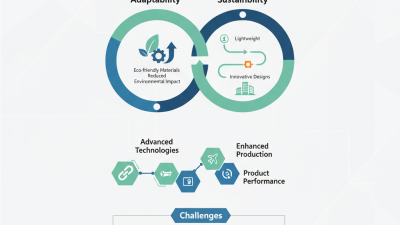
The future of aluminum alloy profile development and design is shaped by innovation and sustainability. Industry reports indicate that the global aluminum market is expected to reach $200 billion by 2026, with a notable shift towards eco-friendly production methods. These trends emphasize recycling and energy efficiency, vital for reducing carbon footprints. The lightweight nature of aluminum, combined with increased durability, makes it an ideal choice for various applications, including construction and automotive.
As designers and engineers explore new horizons, the integration of digital technologies plays a crucial role. Advanced simulations and modeling techniques are redefining how profiles are designed, offering solutions tailored to specific project requirements. The current adoption of 3D printing in aluminum alloys is another game-changer, allowing for custom shapes that were previously impossible. Yet, challenges remain in material consistency and cost-effective production processes.
Continuous research is vital in optimizing alloy compositions. The quest for better mechanical properties and corrosion resistance drives innovation. However, balancing these improvements with cost and environmental impact often leads to difficult decisions for engineers. As the industry evolves, collaboration with academic institutions can spur breakthroughs, but more work is needed to achieve truly sustainable practices while meeting growing demands for lightweight and efficient materials.







 wechat