What is Channel Aluminum Extrusion Profiles and Their Uses?
Channel Aluminum Extrusion Profiles have become essential in various industries, providing lightweight yet strong solutions. Experts like Dr. Emily White, a leading figure in aluminum engineering, stated, "The versatility of channel profiles opens new avenues in design and functionality." Her insights reflect the growing importance of these profiles in modern manufacturing.
These profiles, characterized by their unique shapes, are widely used in structural applications, framing, and customization. The specific geometry allows for easy integration into various designs, catering to industrial, commercial, and residential needs. However, not all applications benefit equally from their properties. Understanding the right contexts for their use is crucial.
While many manufacturers utilize Channel Aluminum Extrusion Profiles effectively, some may overlook potential limitations, such as load-bearing capacities. It's essential for professionals to analyze these aspects critically. As industries continue to evolve, refining our understanding of these profiles will ensure they can meet future demands effectively.

What Are Channel Aluminum Extrusion Profiles?
Channel aluminum extrusion profiles are versatile components used in various industries. These profiles are created by forcing aluminum through a dye to produce a specific shape. Their channel structure allows for excellent structural integrity while maintaining a lightweight design. This makes channel aluminum profiles ideal for construction, automotive, and manufacturing applications.
In construction, these profiles serve as frames and supports. Their robust design can withstand significant loads. In the automotive sector, channel extrusions are used for body frames and panels. They contribute to vehicle weight reduction and enhance fuel efficiency. Manufacturers also employ channel aluminum for machinery and equipment, benefiting from its corrosion resistance and durability.
Nevertheless, selecting the right channel profile can be challenging. Various options exist, and the wrong choice may lead to structural failures or inefficiencies. Additionally, understanding the specific needs of a project is crucial. Often, cost considerations overshadow the importance of material quality, which can result in long-term issues. Careful evaluation is necessary to ensure a balanced decision that meets both budget and performance requirements.
Channel Aluminum Extrusion Profiles Usage by Industry
Characteristics of Channel Aluminum Extrusions
Channel aluminum extrusion profiles are widely recognized for their unique characteristics. These profiles feature a distinct channel shape, making them useful in various applications. Their design allows for strength and efficiency, which meets the demands of modern construction and manufacturing.
One of the main advantages of channel aluminum extrusions is their lightweight nature. This property simplifies installation and transportation. Additionally, aluminum is resistant to corrosion, providing durability over time. However, the specifics of the alloy used can affect strength and adaptability. It’s crucial to choose the right type based on the intended application.
Versatility defines channel aluminum profiles. They are used in frameworks, support structures, and as components in machinery. Designers appreciate their ease of use and ability to be customized. Despite these benefits, ensuring the right dimensions and load capacity is essential. Poor choices here could lead to structural failures. Balancing aesthetics with functionality can be challenging, yet it’s vital for optimal results.
Common Applications of Channel Aluminum Extrusion Profiles
Channel aluminum extrusion profiles play a vital role in various industries. Their unique shape provides excellent structural support while being lightweight and rust-resistant. This combination makes them ideal for applications requiring strength without excessive weight.
One common application is in construction. Builders use channel profiles for framing, supporting walls, and creating durable structures. They work well in both residential and commercial projects. These profiles also find their place in manufacturing. Industries utilize them for machinery components, conveyor systems, and support brackets. Their versatility enhances efficiency and stability.
Transportation is another key area. Channel profiles are used in truck beds, trailers, and rail systems. Their resistance to corrosion ensures longevity, even in harsh environments. While channel aluminum profiles are widely beneficial, their manufacturing process can sometimes lead to inconsistencies. Regular quality checks are necessary to maintain standards. Balancing cost and quality remains a challenge for many users.
What is Channel Aluminum Extrusion Profiles and Their Uses? - Common Applications of Channel Aluminum Extrusion Profiles
| Profile Type |
Dimension (mm) |
Thickness (mm) |
Weight (kg/m) |
Common Applications |
| U Channel |
50 x 30 |
3 |
2.4 |
Construction, framing, and supports |
| C Channel |
75 x 45 |
4 |
3.0 |
Railings, shelves, and racks |
| L Channel |
40 x 40 |
5 |
2.8 |
Brackets, supports, and structural components |
| J Channel |
60 x 20 |
2.5 |
1.5 |
Electrical conduits, trim, and molding |
| V Channel |
30 x 15 |
2 |
1.0 |
Signage, decorative elements |
Advantages of Using Channel Aluminum Extrusions
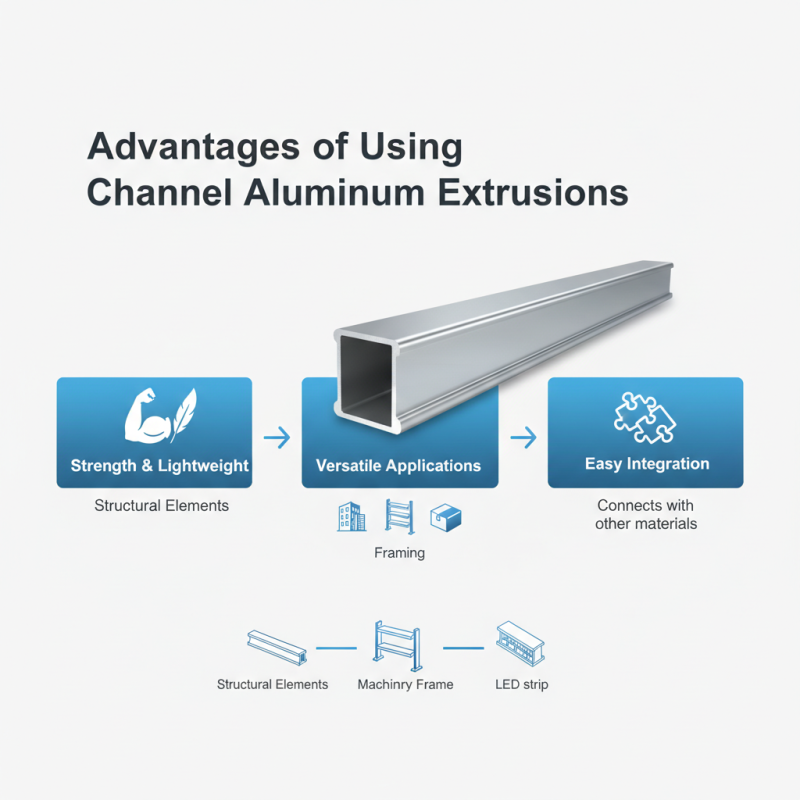
Channel aluminum extrusion profiles are versatile components used in various applications. Their unique shape provides an excellent balance of strength and lightweight construction. This makes them ideal for use in structural elements, framing, and enclosures. The channel's design allows for easy integration with other materials.
One significant advantage is their resistance to corrosion. Aluminum naturally forms a protective oxide layer. This means that channel profiles maintain their integrity in harsh environments. In addition, they can be anodized for even greater durability. This feature is particularly beneficial for outdoor structures or industrial applications.
When working with channel aluminum extrusions, consider the weight and load requirements. Choosing the right thickness can impact strength and stability. It's essential to analyze the needs of your project critically. Take time to measure, and be willing to reassess your plans. Sometimes, a different extrusion shape may serve your project's goals better.
Tip: Always consult with experts before finalizing your design. Their insights can prevent costly mistakes and enhance your project’s success. Embrace feedback and request input from peers. Adjustments can lead to improved outcomes in structural integrity and functionality.
Comparing Channel Aluminum to Other Profile Types
Channel aluminum extrusion profiles are gaining popularity across various industries, but how do they compare to other profile types? Their unique shape allows for effective structural support, particularly in applications requiring a lightweight yet durable component. According to the Aluminum Association, aluminum's strength-to-weight ratio is nearly three times that of steel. This makes channel profiles ideal for construction, automotive, and aerospace applications, where every ounce matters.
Unlike standard rectangular or square profiles, channel aluminum offers enhanced flexibility in design. Its open channel shape allows for easy integration of additional components, such as wiring or insulation. Reports indicate that companies utilizing channel aluminum have increased efficiency by 25% in assembly processes. However, the market does face challenges. The production of channel profiles can be more complex and require precise machining. This complexity may lead to increased costs and longer lead times, prompting manufacturers to carefully evaluate their needs.
In contrast to other materials, such as plastics or steel, channel aluminum strikes a balance between performance and cost. While steel offers higher tensile strength, it is significantly heavier, making transport and handling costlier. Plastics, while lightweight, often lack the durability required for heavy-load applications. Thus, while channel aluminum has its drawbacks, its role remains significant in industries that prioritize both efficiency and performance. The ongoing advancements in extrusions technology may further enhance its application potential in the future.








 wechat