Top 10 Aluminum Alloy Profiles from China for Global Buyers?
The global demand for Aluminum Alloy Profiles has seen significant growth in recent years. According to a market report by Allied Market Research, the aluminum alloy profiles market is projected to reach $132 billion by 2027, indicating a compound annual growth rate (CAGR) of 5.5%. This surge is largely driven by the construction, automotive, and aerospace sectors, which increasingly rely on lightweight and durable materials.
Industry expert Dr. Emily Chen states, "Aluminum Alloy Profiles represent a vital component in advanced manufacturing processes." Her insights highlight the need for global buyers to source high-quality aluminum profiles. Understanding the leading suppliers, particularly from China, is crucial for maintaining a competitive edge. Chinese manufacturers are known for their innovative production techniques and cost-effective solutions.
However, choosing the right aluminum profiles can be challenging. Not all suppliers guarantee the same level of quality or compliance with global standards. Buyers need to evaluate their options carefully, focusing on specifications, production capabilities, and reliability. The landscape of Aluminum Alloy Profiles is competitive but also filled with opportunities for growth and collaboration. The right information can lead to informed decisions that benefit projects across various industries.
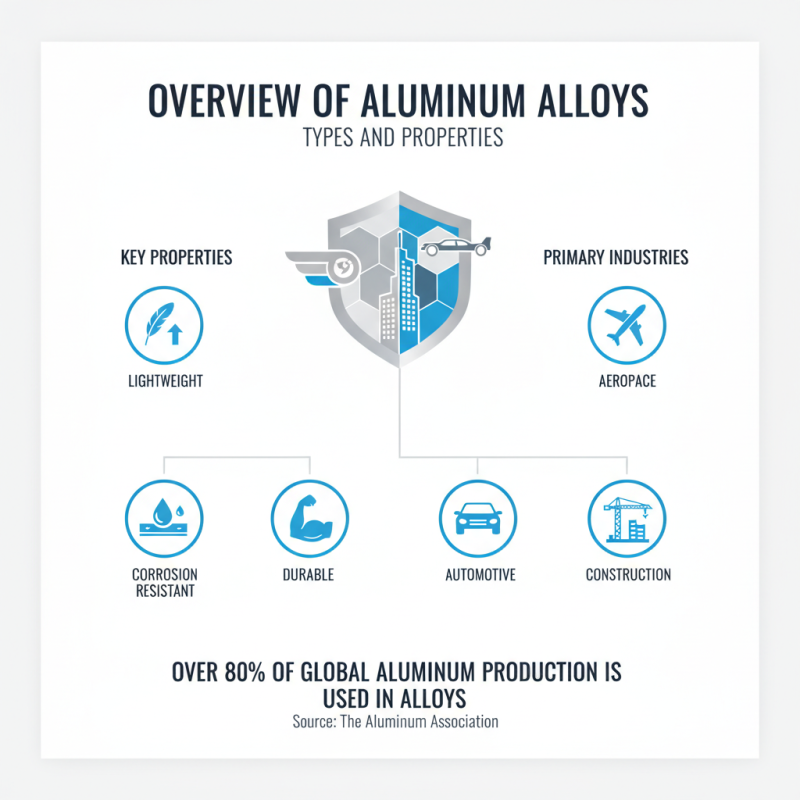
Overview of Aluminum Alloys: Types and Properties
Aluminum alloys are vital in various industries due to their unique properties. They are lightweight, durable, and resistant to corrosion. These attributes make them perfect for applications in aerospace, automotive, and construction sectors. According to the Aluminum Association, over 80% of aluminum produced globally is used in aluminum alloys. This highlights their importance in modern manufacturing.
Different types of aluminum alloys can be categorized based on their primary alloying elements. Series 1000, for instance, is over 99% aluminum and exhibits excellent corrosion resistance. In contrast, series 6000 alloys include magnesium and silicon, making them more versatile. They are commonly used for structural components. The mechanical properties can vary significantly, sometimes showing tensile strengths exceeding 500 MPa. This variability allows engineers to select specific alloys for their project's needs.
However, there are challenges. Not all alloys are easy to work with. Some require precise conditions during welding or machining. The inconsistency in quality among suppliers can also affect the final product. Buyers should consider these factors carefully when sourcing aluminum alloys. Understanding the specific properties and potential limitations of each alloy type is crucial for informed decision-making.
Key Characteristics of Chinese Aluminum Alloy Profiles
Chinese aluminum alloy profiles are renowned for their versatility and strength. They cover a broad spectrum of applications, from construction to automotive industries. According to a 2022 industry report by Statista, the global demand for aluminum profiles is expected to grow by 5% annually, signaling a robust market for Chinese exports.
Key characteristics of these profiles include lightweight properties, corrosion resistance, and excellent thermal conductivity. The combination of these traits makes them ideal for various applications. For instance, profiles made from 6061 and 6063 alloys are highly regarded in construction due to their structural integrity. However, there are concerns about the consistency of quality across suppliers. Some profiles fail to meet international standards, which can lead to durability issues.
The manufacturing processes in China continue to evolve. While many factories maintain high-quality production, others may cut corners. This inconsistency can affect performance, particularly under extreme environmental conditions. A comprehensive understanding of the suppliers and their certifications can mitigate risks. Buyers should prioritize suppliers with ISO certifications and proven track records to ensure reliability.
Top 10 Aluminum Alloy Profiles: Features and Applications
Aluminum alloys have become vital in various industries. Their lightweight nature, corrosion resistance, and strength make them desirable. The top profiles include 6061, 6063, and 7075 alloys. These materials are used extensively in construction, aerospace, and automotive sectors. According to industry reports, 6061 accounts for nearly 30% of aluminum sales. Its structural integrity is unmatched.
Applications are diverse. In construction, aluminum alloys support frameworks and roofing. They provide durability and aesthetic appeal. For aerospace, strength-to-weight ratio is critical. Alloy 7075 is favored in aircraft due to its high strength. It is also used in military applications. Data indicates that lightweight structures can lead to 10-20% fuel savings.
Despite these advantages, there are challenges. The machining of aluminum alloys can lead to wear and degradation. This necessitates greater attention in production techniques. Additionally, global supply chain issues can impact availability. Manufacturers need to innovate continually to overcome these hurdles. Understanding these factors is crucial for global buyers looking to invest in aluminum profiles.
Top 10 Aluminum Alloy Profiles from China for Global Buyers
This bar chart illustrates the usage volume of the top 10 aluminum alloy profiles sourced from China. The data reflects the global demand for these profiles in various applications across different industries.
Global Market Trends for Aluminum Profiles from China
The global market for aluminum profiles is evolving rapidly. According to a report by Grand View Research, the aluminum extrusion market is expected to reach $45.21 billion by 2025. This growth stems from increasing demand across various sectors, particularly in construction and automotive industries. The versatility of aluminum alloys, combined with their lightweight properties, makes them ideal for numerous applications.
China has become a leading producer, accounting for over 55% of the global output. This significant share reflects the country’s advanced manufacturing capabilities. Aluminum alloy profiles from China are appreciated for their durability and cost-effectiveness. However, the industry faces challenges such as fluctuating raw material prices and competitive pressure. Market players need to adapt quickly to maintain their edge.
Sustainability is becoming a driving force in the global aluminum profile market. A survey by the Aluminum Association highlighted that 75% of manufacturers are investing in environmentally friendly practices. The push for green building materials is reshaping buyer preferences. Companies are increasingly seeking suppliers who prioritize sustainable production processes.
Sourcing and Importing Aluminum Profiles: A Guide for Buyers
When sourcing aluminum profiles from China, understanding the market dynamics is essential. The global aluminum extrusion market is projected to grow at a CAGR of 5.8% from 2021 to 2026, driven by increasing demand in construction and automotive sectors. Chinese manufacturers play a significant role, producing approximately 50% of the world's aluminum profiles. This statistic highlights the importance of establishing reliable partnerships for importers.
Buyers should prioritize assessing suppliers based on certifications and production capabilities. The ISO 9001 certification is a benchmark for quality management. Additionally, understanding the profiles' mechanical properties, such as tensile strength and corrosion resistance, is critical. Not all suppliers maintain consistent quality, which can lead to unexpected issues with durability and performance. Regular audits and samples are advisable to mitigate risks.
Sourcing from China can vary in lead times and costs. Some suppliers may present lower prices, but hidden charges can occur. Pay attention to terms of delivery, and ensure clarity in communication. It is not uncommon for initial cost-saving decisions to lead to higher overall expenses due to quality control issues. Thus, performing due diligence is imperative for successful procurement.
Top 10 Aluminum Alloy Profiles from China for Global Buyers
| Profile Type |
Alloy Series |
Applications |
Surface Treatment |
Standard Length |
| Square Tube |
6063 |
Construction, Furniture |
Anodized |
6m |
| Rectangular Tube |
6061 |
Automotive, Machinery |
Powder Coated |
6m |
| Angle Profile |
6063 |
Frames, Structures |
Mill Finish |
6m |
| Round Bar |
7075 |
Aerospace, Sports Equipment |
Anodized |
6m |
| I-Beam |
6061 |
Construction, Bridge |
Galvanized |
6m |
| Sheet |
5083 |
Marine, Automotive |
Anodized |
2.5m x 1.25m |
| Channel |
6060 |
Framing, Supports |
Mill Finish |
6m |
| Pipe |
6063 |
Plumbing, HVAC |
Powder Coated |
6m |
| Fencing Profile |
6063 |
Fencing, Barriers |
Anodized |
6m |
| Display Stand Profile |
6060 |
Retail, Trade Shows |
Powder Coated |
2m |








 wechat