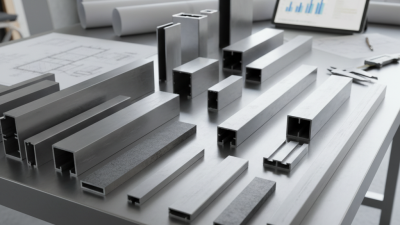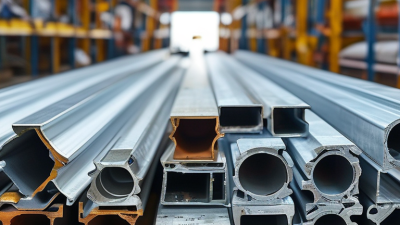
Aluminum Profiles appear in more places than many people realize. They frame office doors, support solar panels, protect machine components, and shape lightweight furniture. Their popularity comes from a practical balance of low weight, corrosion resistance, and useful structural strength. Extrusion allows manufacturers to create precise shapes, including channels, T-slots, tubes, and complex heat-sink designs. This flexibility reduces cutting and assembly work.
In construction, Aluminum Profiles form window frames, curtain walls, handrails, and partition systems. In factories, they build conveyor supports, workstations, safety enclosures, and adjustable equipment frames. Engineers also use them in vehicles because lower weight can improve energy efficiency. Electronics rely on specialized profiles to move heat away from LED units, power supplies, and control systems. Solar mounting structures use them for their weather resistance and easy installation.
However, aluminum is not automatically the best choice. Alloy selection, wall thickness, load direction, and connection methods affect real performance. A thin profile may look strong but bend under repeated stress. Thermal expansion can also create movement in long outdoor installations. Finish matters too. Anodizing and powder coating improve appearance and surface protection, but neither replaces proper design. A common mistake is choosing a profile by appearance alone. Reliable projects consider engineering data, installation conditions, maintenance needs, and applicable safety standards. The following discussion examines where Aluminum Profiles work best, what limits them, and how informed selection prevents costly redesigns. Small details matter.
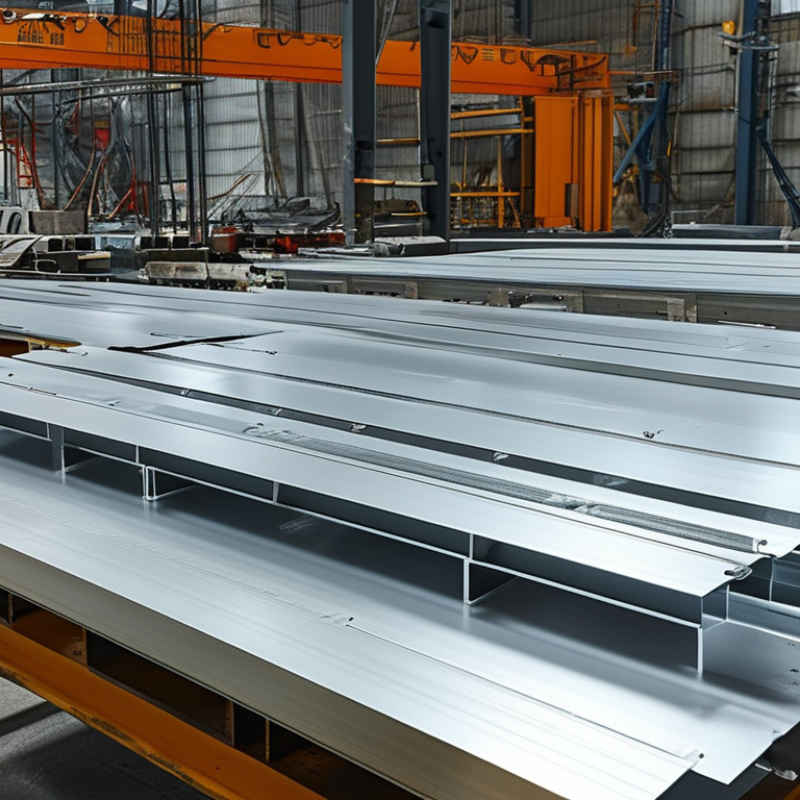
Aluminum profiles are used for machine frames, safety guards, workstations, conveyor supports, solar structures, and architectural assemblies. Their main advantage begins with density. Engineering materials data commonly lists aluminum at approximately 2.70 g/cm³, while ordinary steel is near 7.85 g/cm³. At equal volume, aluminum weighs about one-third as much as steel. That difference makes manual installation easier and reduces loads on supporting structures.
The phrase “one-third the weight” needs care. It compares equal volumes, not equal strength or finished parts. Designers must check load, deflection, fasteners, and wall thickness. Extruded profiles can place material where stiffness matters, such as along corners or ribs. This helps create rigid frames without making every section heavy.
In practical workshops, a long aluminum rail is easier to reposition than a similar steel rail. Sometimes, too easy; vibration control may require better bracing.
The International Aluminium Institute reports that recycling aluminum can save up to 95% of the energy used for primary production. That supports its use in repairable, long-life systems. However, recycled content, surface treatment, and transport still affect the total environmental result. Industry data should guide decisions, not replace testing. A profile that looks efficient on paper may fail when exposed to repeated impacts, heat, or poor joints.
What Are Aluminum Profiles Used For?
Extrusion Grades and Shapes: 6061-T6, 6063-T5, and Custom Sections
Aluminum profiles appear in machine frames, guarding, rail systems, heat sinks, windows, and transport structures. The grade matters as much as the shape. 6061-T6 offers higher strength, with typical minimum tensile strength near 290 MPa under ASTM B221. It suits brackets, load-bearing rails, and structural assemblies. However, it usually needs more forming force and may show a less decorative surface after extrusion.
6063-T5 is softer, easier to extrude, and commonly selected for frames, trims, doors, and display systems. Its tensile strength is typically around 150 MPa, depending on section size and specification. The alloy also supports a smoother anodized appearance. The stronger alloy is not automatically better. That assumption can increase machining time, weight, and cost without improving the finished product.
Custom sections reduce assembly parts by combining channels, ribs, screw tracks, and cable paths into one profile. The Aluminum Association’s Aluminum Statistical Review identifies building and construction as a major aluminum-use sector, while the International Aluminium Institute reported global aluminum production above 70 million tonnes in 2023. These figures show the material’s scale, but they do not replace engineering checks. Wall thickness, corner radius, quenching, and tolerances can change performance. A clean drawing may still be weak. Designers should verify temper certificates and test the actual extrusion, not rely only on a catalog value.
Aluminum profiles are widely used in building applications because they combine low weight, corrosion resistance, and precise dimensions. In window systems, extruded profiles form the frame, sash, glazing pocket, and drainage channels. Thermal breaks help reduce heat transfer between indoor and outdoor surfaces. Gaskets and carefully fitted corners also improve air and water performance. Small installation errors can still cause noticeable drafts or leaks.
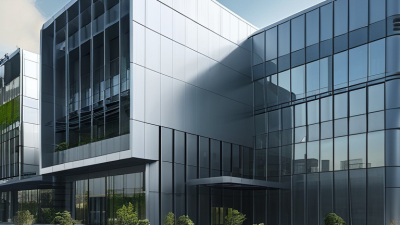
Curtain walls use aluminum mullions and transoms to support glass or lightweight panels across a building facade. These systems transfer wind pressure to the main structure while allowing daylight into offices, shops, and public spaces. Proper anchors, movement joints, and drainage paths matter greatly. A curtain wall is usually non-load-bearing, so it must not be treated as a replacement for the building’s primary frame. Designers should verify wind loads, fire requirements, thermal performance, and local codes.
Aluminum profiles also create structural frames for roofs, partitions, equipment enclosures, and light architectural supports. Their open channels can simplify fastening and adjustment on site. However, profile strength depends on alloy, wall thickness, span, connections, and loading conditions. The easy assumption is that thicker always means safer, but connection design may control the result. Aluminum can also lose strength at elevated temperatures, so engineers need honest calculations rather than visual confidence. On a real project, checking tolerances, surface damage, and fastener compatibility before installation prevents expensive corrections later.
What Are Aluminum Profiles Used For?
In industrial automation, aluminum profiles form rigid frames for robots, sensors, guards, and workstations. Their T-slots allow brackets and components to move without extensive drilling. This helps engineers adjust layouts during installation and maintenance. A clean, modular frame also supports faster changes on busy production floors. However, lightweight does not mean unlimited strength. Engineers must check span, vibration, joint quality, and expected loads before selecting a profile.
Conveyors commonly use aluminum profiles for side frames, support legs, guide rails, and inspection stations. The material resists corrosion and remains practical in clean manufacturing areas. Profiles also serve as heat sinks for LED systems, control cabinets, and electronic assemblies. Their surface area transfers heat away from sensitive components. Heat performance depends on airflow, contact pressure, surface condition, and profile orientation. Enclosures use the same system to protect controls, wiring, and measuring equipment from dust and accidental contact. Poor sealing can still cause problems.
Tips: Select the profile after calculating the load, not before. Use corner joints where vibration is limited. Add cross-bracing for long conveyor sections. Leave access space around heat-producing parts. A prototype frame can reveal unexpected flex, awkward maintenance access, or weak fasteners. Recheck those details before production.
| Industrial Application | Primary Function | Common Profile or Section | Typical Dimensions or Ratings | Common Aluminum Alloys | Key Advantages | Important Design Considerations |
|---|---|---|---|---|---|---|
| Automation Frames | Supports robots, sensors, actuators, guarding, control equipment, and workstations. | T-slot or modular square and rectangular extrusions. | Typical outer dimensions range from 20 × 20 mm to 80 × 80 mm, selected according to span, load, and required stiffness. | 6063-T5 or 6063-T6 for general framing; 6061-T6 where higher strength is required. | Lightweight, corrosion resistant, adjustable, and easy to assemble with brackets and T-slot fasteners. | Check bending, deflection, joint strength, vibration, and anchoring. Larger profiles or additional supports may be needed for long spans and dynamic loads. |
| Conveyor Systems | Forms conveyor side frames, support legs, guide rails, sensor mounts, and transfer modules. | Rectangular framing profiles, T-slot profiles, rail-support profiles, and custom extrusions. | Common frame sizes range from approximately 30 × 30 mm to 90 × 90 mm. Conveyor width, product mass, and support spacing determine the final section. | 6063-T5 is widely used for extruded framing because it provides good surface finish and corrosion resistance. | Fast reconfiguration, smooth finished surfaces, low maintenance, and compatibility with modular accessories. | Consider belt or roller loads, impact forces, alignment, sanitation requirements, drive vibration, and the use of wear-resistant contact surfaces. |
| Heat Sinks | Transfers heat away from LEDs, power electronics, motor drives, processors, and other heat-generating components. | Flat-base extrusions with straight, radial, pin-fin, or staggered fins. | Typical fin heights range from about 10 mm to 80 mm. Base width commonly ranges from approximately 20 mm to 150 mm, depending on heat load and airflow. | 6063 aluminum provides thermal conductivity of roughly 200 W/m·K; 6061 commonly provides approximately 167 W/m·K. | High thermal conductivity, low density, large surface area, and efficient production of long continuous sections. | Thermal performance depends on fin spacing, airflow, orientation, contact resistance, surface treatment, and the available cooling area. |
| Equipment Enclosures | Protects electrical controls, instrumentation, power supplies, batteries, and industrial assemblies. | Frame profiles combined with aluminum panels, covers, doors, corner connectors, and sealing components. | Frame profiles commonly range from 20 × 20 mm to 60 × 60 mm. Panel thickness is often approximately 1.5–3.0 mm, depending on size and rigidity. | 6063-T5 or 6063-T6 for frames; 5052-H32 or 6061-T6 may be used for sheet panels and machined components. | Low weight, corrosion resistance, electromagnetic shielding potential, modular access, and good heat dissipation. | Ingress protection depends on the complete enclosure design, including joints, gaskets, doors, cable glands, and fasteners—not the aluminum profile alone. |
| Machine Guarding | Supports safety panels, transparent screens, interlocked doors, and protective barriers around machinery. | Lightweight T-slot profiles with groove-compatible panel holders and corner brackets. | Typical profile sizes range from 20 × 20 mm to 45 × 45 mm for light guarding; larger sections may be required for tall or freestanding panels. | 6063-T5 or 6063-T6. | Quick installation, reusable components, easy panel replacement, and clean modular appearance. | Guarding must be designed to meet applicable machinery-safety requirements, including opening dimensions, access control, stability, and interlock placement. |
| Workstations and Material-Handling Structures | Creates adjustable benches, tool stands, carts, racks, fixtures, and ergonomic assembly stations. | Modular T-slot profiles with adjustable shelves, casters, handles, and accessory brackets. | Common profile sizes range from 20 × 20 mm to 60 × 60 mm. Working height and shelf span are typically customized to operator and load requirements. | 6063-T5 or 6063-T6. | Easy customization, low assembly time, cleanability, and the ability to add or reposition accessories. | Evaluate static load, caster loads, tipping resistance, operator reach, repeated impacts, and the stiffness of bolted connections. |
Note: Dimensions and material values shown are typical engineering ranges for industrial aluminum profiles. Final selection should be verified against the required load, span, temperature, corrosion environment, safety requirements, and thermal conditions.
What Are Aluminum Profiles Used For?
Aluminum profiles support practical, lower-impact designs across construction, transport, solar mounting, machinery frames, and interior partitions. Their hollow sections reduce material use while maintaining useful strength. A window frame, factory guard, or rooftop rail can also enter established recycling systems after service.
The International Aluminium Institute reports that recycling aluminum requires up to 95% less energy than producing primary aluminum. That difference matters. Remelting sorted scrap avoids much of the energy-intensive refining process. The Institute also reports that about 75% of all aluminum ever produced remains in use today. This long service life reflects aluminum’s durability and repeated recyclability.
The 95% figure is powerful, but it is not a free pass. Profiles should be designed for disassembly, with fewer permanent adhesives and mixed-material connections. Clean offcuts from an extrusion workshop are easier to recover than painted, contaminated assemblies. A damaged solar frame can be separated, sorted, and remelted more efficiently when its alloy is known. Recycling still needs collection, transport, electricity, and careful sorting. Results vary by region.
Some projects ignore these details.
That is where sustainability claims become weak. Engineers should document recycled content, expected service life, and recovery routes. Industry data offers direction, not certainty. A genuinely responsible aluminum profile combines efficient design, long use, and a realistic plan for its next cycle.
Recycling aluminum requires approximately 5% of the energy used to produce primary aluminum. This means that recycling can save up to 95% of the energy, helping reduce the environmental impact of aluminum profiles used in construction, transportation, renewable energy systems, and manufacturing.
Data shown as an energy-use index: primary aluminum production = 100.