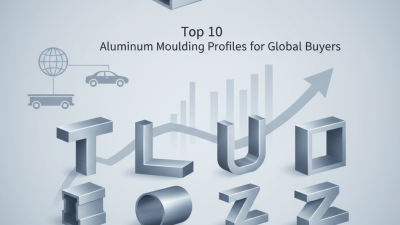
One Stop Solution For Aluminum Profiles
调查
表单加载...

China Top 10 Aluminum Moulding Profiles Suppliers

China’s aluminum industry has become a major source of architectural, industrial, and interior components. This article examines China’s Top 10 Aluminum Moulding Profiles suppliers, focusing on practical performance rather than popularity alone. A supplier may offer polished samples, yet production consistency matters more.

The evaluation considers alloy options, extrusion accuracy, surface treatment, tooling capability, and quality control. It also reviews certifications, export experience, packaging, and response speed. These details affect real projects. A clean silver finish can still fail if dimensions vary by a few tenths of a millimeter. A competitive price may also hide expensive tooling delays.

Dr. J. Gilbert Kaufman, a respected aluminum metallurgist, emphasized a useful principle: “Alloy selection and processing determine much of aluminum’s final performance.” That idea remains important when comparing Aluminum Moulding Profiles from Chinese manufacturers. Different applications require different alloys, tempers, wall thicknesses, and finishing methods. Construction trim, cabinet edging, LED channels, and machinery frames should not be judged by identical standards.

This guide aims to connect supplier claims with observable evidence. It considers factory equipment, inspection records, sample quality, and communication during development. However, no ranking can represent every buyer’s priorities. A supplier suitable for high-volume architectural profiles may not fit a small custom order. That limitation deserves attention.

The strongest companies usually combine stable extrusion lines with skilled finishing teams. They also explain weaknesses openly. That is valuable. Reliability is not created by a catalog alone; it is proven through tolerances, repeat orders, protective packaging, and accountable service.
China Top 10 Aluminum Moulding Profiles Suppliers

Definition and Scope of Aluminum Moulding Profiles

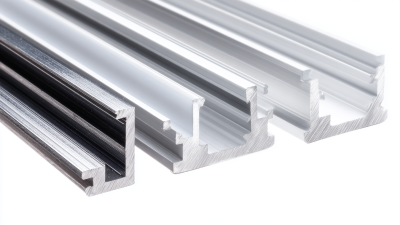
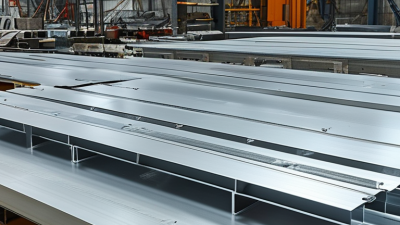
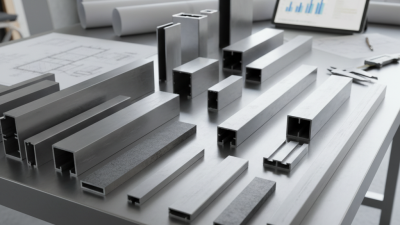
Aluminum moulding profiles are shaped aluminum sections designed to provide edges, transitions, frames, or decorative finishes. They are commonly produced through extrusion, where heated aluminum passes through a precisely machined die. The resulting profile may be straight, curved, hollow, slotted, or assembled with other components. Surface treatments can include anodizing, powder coating, brushing, and polishing.

The scope covers functional and decorative applications. Examples include cabinet edges, ceiling trims, window surrounds, wall panels, furniture frames, lighting channels, and vehicle interiors. In supplier evaluations, buyers should examine alloy grade, temper, dimensional tolerance, wall thickness, surface quality, and cutting accuracy. Alloy selection affects strength, corrosion resistance, weight, and machinability. A profile for a humid bathroom may need different protection from one used inside dry office furniture.

Drawings matter greatly. A small change in corner radius can affect assembly, appearance, and tooling cost. Extrusion length alone does not define quality. Inspection may include caliper measurements, coating thickness checks, color comparison, and tests for dents or scratches. The boundary between moulding, trim, and structural extrusion is not always clear. Some suppliers describe the same section differently. That can confuse procurement teams.

In practice, experienced buyers request samples before approving mass production. They also confirm packaging, tolerances, minimum order quantities, and replacement procedures in writing. Even a polished surface can hide uneven wall thickness. This detail is easy to miss. Recognizing such limitations makes comparisons more reliable when reviewing China’s top aluminum moulding profile suppliers.
China Top 10 Aluminum Moulding Profiles Suppliers — Definition and Scope

Aluminum moulding profiles are extruded aluminum sections used for decorative edging, architectural framing, trim, enclosures, and lightweight structural applications. The chart shows commonly specified alloy-temper combinations within this product scope, using representative minimum tensile-strength values rather than company or brand data.

Interpretation: 6063 alloys are widely used for smooth-surface architectural and decorative mouldings, while 6061, 6005A, and 6082 generally provide higher strength for structural or heavy-duty profiles. Exact mechanical requirements depend on the applicable EN or ASTM specification, temper, profile geometry, and supplier quality controls.

China’s Aluminum Moulding Profile Industry Overview

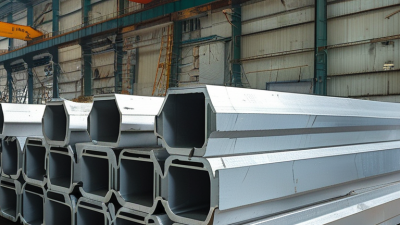
China's aluminum moulding profile industry serves construction, furniture, lighting, transport, and industrial equipment markets. The top ten suppliers typically cluster around established extrusion hubs in Guangdong, Jiangsu, Zhejiang, and Shandong. Their portfolios often include skirting, trims, frames, channels, decorative lines, and custom profiles. Demand is shifting. Buyers increasingly request slimmer sections, tighter tolerances, recycled content, and durable surface finishes. Common options include anodizing, powder coating, electrophoresis, and wood-grain transfer finishes.

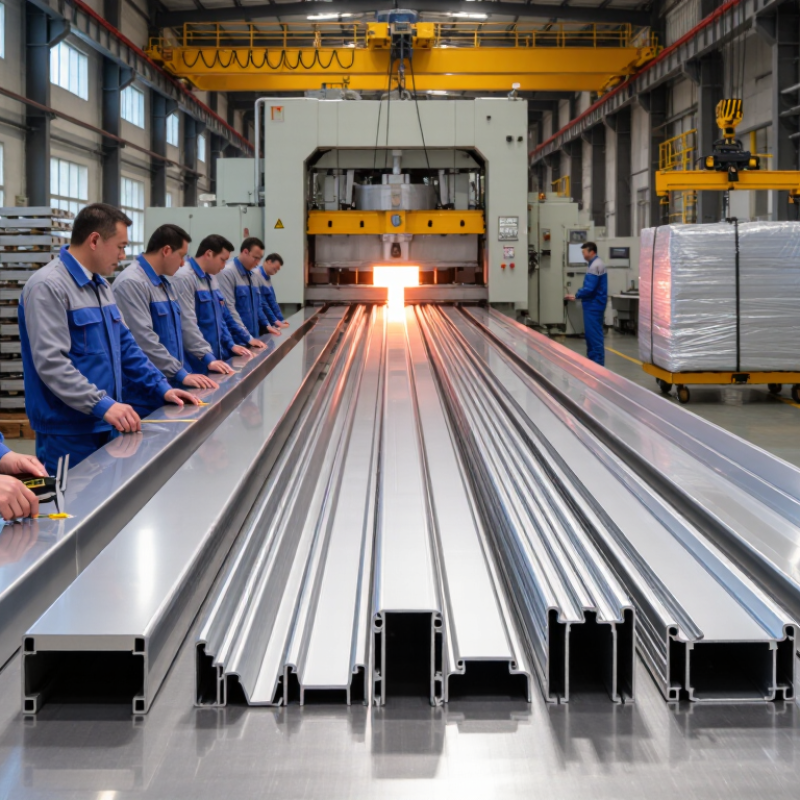
From my experience reviewing extrusion projects, tooling quality usually determines the first serious cost difference. A capable supplier checks billet temperature, die wear, wall thickness, straightness, and surface defects. It should also provide drawings, samples, inspection records, and traceable batch information. Small details matter. A two-millimeter variation can complicate assembly, especially in long decorative runs. However, supplier comparisons are not always clean. Some quotations exclude tooling, packaging, testing, or inland transport, making the lowest price misleading. Technical communication becomes practical evidence, not sales language.

Reliable evaluation should combine production capacity with alloy control, finishing consistency, delivery history, and responsive engineering support. Relevant standards and third-party test reports can strengthen confidence, but documents still require checking. Ask whether the quoted alloy matches the application, such as 6063 for architectural appearance or stronger grades for structural demands. Lead times vary with die complexity, color, minimum order quantity, and seasonal capacity. A promising supplier may still miss a detail. Clear samples and written tolerances reduce that risk.

Selection Criteria for the Top 10 Suppliers

Selecting China’s top aluminum moulding profile suppliers requires evidence, not polished catalogues. The assessment should begin with alloy control, die capability, dimensional stability, and surface consistency. Request mill certificates, chemical analysis, tensile results, and inspection records for each production batch. ISO 9001 certification supports process discipline, but it cannot replace factory-level verification. Compare profile tolerances with applicable GB/T or EN requirements, then inspect sample lengths under consistent lighting.

Small details matter. Assess die correction history, tooling ownership, minimum order flexibility, and realistic monthly capacity. A supplier claiming unlimited capacity deserves careful questioning.

Sustainability should be measured, not assumed. The International Aluminium Institute reports that recycled aluminium requires about 95% less energy than primary aluminium. Its Aluminium Sector Greenhouse Gas Pathways to 2050 report also identifies energy transition as a key decarbonisation lever.

Ask for recycled-content evidence, scrap-recovery rates, electricity data, and clear emissions boundaries.

Commercial reliability needs equal weight. Landed-cost calculations should include packaging, inland transport, port handling, tariffs, and defect replacement. Request corrective-action reports and traceable response times.

Weaknesses hide. A pilot order with destructive testing often provides stronger evidence than a confident sales presentation. No scorecard is perfect; weighting quality, delivery, compliance, and communication makes the final ranking more defensible.

Profiles of China’s Top 10 Aluminum Moulding Suppliers

Profiles of China’s Top 10 Aluminum Moulding Suppliers

China remains a major force in the aluminum extrusion industry. The International Aluminium Institute reported approximately 41.6 million tonnes of primary aluminum production in China during 2023. This scale supports broad supply capabilities, from standard window sections to complex industrial moulding profiles. The top ten supplier profiles should therefore be judged beyond production volume. Die-making experience, alloy control, surface treatment, and export quality are equally important.

A reliable profile includes measurable details. Buyers should check alloy grades such as 6063 and 6061, dimensional tolerances, monthly extrusion capacity, and coating thickness. The China Nonferrous Metals Industry Association has repeatedly highlighted efficiency and quality upgrades across China’s nonferrous manufacturing sector. In practice, suppliers using spectrometers, tensile testing, and automated inspection offer stronger traceability. Small details matter. A clean die surface can prevent visible lines on long architectural profiles.

The strongest supplier profiles also explain lead times, packaging methods, and corrective-action procedures. A 2024 industry analysis by Grand View Research identified construction and transportation as important aluminum demand areas, increasing pressure for stable delivery and consistent specifications. Still, no ranking is perfectly stable. A supplier may show impressive capacity yet struggle with customized tooling or peak-season schedules. Buyers should request recent test reports, sample sections, and evidence of repeat orders before making a final assessment. Numbers help, but production discipline is harder to measure.

China Top 10 Aluminum Moulding Profiles Suppliers - Profiles of China’s Top 10 Aluminum Moulding Suppliers

An anonymized comparison of commonly available aluminum moulding profile capabilities in China

Rank Anonymous Supplier Profile Common Alloys Typical Temper Profile Categories Surface Finishes Primary Applications Value-Added Services
01 Supplier Profile 01 6063, 6061 T5, T6 Architectural mouldings, trim, frames Anodizing, powder coating, mill finish Doors, windows, curtain walls Die design, extrusion, cutting, packaging
02 Supplier Profile 02 6063, 6005A T5, T6 Industrial frames, channels, rails Anodizing, electrophoretic coating Automation equipment, workstations CNC machining, drilling, tapping
03 Supplier Profile 03 6063, 6061, 6463 T5, T6 Decorative trim, furniture profiles Wood-grain transfer, anodizing, polishing Furniture, kitchens, interior decoration Color matching, assembly, protective film
04 Supplier Profile 04 6061, 6063 T6, T651 Heat sinks, housings, structural profiles Mill finish, anodizing, powder coating Electronics cooling, machinery, enclosures Precision extrusion, CNC finishing, inspection
05 Supplier Profile 05 6063, 6005A T5, T6 Solar mounting rails, channels, brackets Anodizing, powder coating, mill finish Photovoltaic systems, outdoor structures Cut-to-length, punching, kitting
06 Supplier Profile 06 6063, 6061 T5, T6 LED housings, diffuser frames, channels Anodizing, powder coating, brushed finish Lighting, signage, commercial displays Diffuser assembly, drilling, custom packaging
07 Supplier Profile 07 6063, 6061, 6082 T5, T6 Transport trim, structural sections Anodizing, powder coating, shot blasting Vehicle bodies, trailers, rail interiors Sawing, CNC machining, assembly support
08 Supplier Profile 08 6063, 6061 T5, T6 Shower frames, partitions, handrails Anodizing, powder coating, electrophoretic coating Bathrooms, offices, public buildings Fabrication, corner processing, hardware fitting
09 Supplier Profile 09 6063, 6061 T5, T6 Cabinet frames, display systems, shelving Powder coating, anodizing, wood-grain finish Retail fixtures, exhibitions, storage systems Cutting, assembly, labeling, export packing
10 Supplier Profile 10 6063, 6061, 6005A T5, T6 Custom mouldings, edge trims, OEM profiles Anodizing, powder coating, polishing, mill finish Construction, industrial equipment, consumer products Prototype tooling, small-batch production, quality documentation

Note: Supplier identities are intentionally omitted. Alloy designations and temper conditions shown are standard aluminum extrusion options commonly used for architectural and industrial profiles; exact availability, tolerances, certifications, minimum order quantities, and production capacity should be confirmed directly for each project.

Quality, Customization, Pricing, and Export Capabilities

China Top 10 Aluminum Moulding Profiles Suppliers

Quality should be tested, not assumed. For a China top-ten supplier shortlist, request mill certificates, alloy records, surface samples, and dimensional reports. EN 755 and ASTM B221 provide useful benchmarks for extrusion tolerances and mechanical performance. The International Aluminium Institute reported global primary aluminium output near 72.6 million tonnes in 2024. That scale improves material availability, but it does not guarantee consistent profiles. Ask how suppliers control billet composition, die wear, aging temperature, and coating thickness. A 0.2-millimeter variation can disrupt assembly.

Customization often separates capable factories from catalogue sellers. Confirm drawings, corner radii, wall thickness, cut lengths, drilling, anodizing, powder coating, and protective packaging before quotation. Custom dies may require a separate charge and several trial runs. Small details matter. Grand View Research projects continued growth in the global aluminium extrusion market through 2030, driven by construction, transport, and industrial demand. However, market growth can encourage rushed production. Review first-article samples before approving a large order.

Pricing should include the aluminium index, conversion cost, die fees, finishing, inspection, and freight. A low quote can still be expensive. Compare the same alloy, temper, finish, tolerance, and order quantity. Export capability requires more than a trading certificate. Check carton strength, moisture protection, pallet dimensions, HS classification, and shipping experience to your destination. Request recent inspection records and a realistic lead-time plan. Supplier claims are useful, but independently verified evidence is stronger.