One Stop Solution For Aluminum Profiles
调查
表单加载...

10 Tips for Buying Aluminum Extrusion Tube Profiles

Buying Aluminum Extrusion Tube Profiles can look simple until a project depends on exact fit, reliable strength, and consistent finish. A tube may appear correct in a supplier’s photograph, yet fail when its wall thickness, alloy, or tolerance is checked. Small differences matter. A one-millimeter error can affect assembly, load performance, and production waste.

This guide presents ten practical tips for making a more informed purchase. It considers alloy selection, temper, dimensions, tolerances, surface treatment, cutting accuracy, packaging, and supplier capability. Experienced buyers usually request technical drawings, material certificates, inspection records, and samples before approving a large order. These documents help connect the product description with measurable evidence. Ask direct questions. Good suppliers should explain their extrusion process clearly.

Cost still matters, but the lowest quotation may hide extra machining, rejected pieces, or delayed delivery. A careful comparison should include total project cost, not only the price per meter. Inspect the profile under practical conditions. Check straightness on a flat surface, examine scratches under clear light, and test whether fittings slide smoothly. Details reveal quality.

No checklist is perfect. Even experienced teams can overlook a packaging issue or assume that a familiar alloy suits every application. That is why each recommendation should be tested against the project’s actual environment, load, and installation method. With measured requirements and honest supplier communication, Aluminum Extrusion Tube Profiles can support safer, cleaner, and more predictable results. Reliability starts before the order is placed.
10 Tips for Buying Aluminum Extrusion Tube Profiles

Define the Required Aluminum Extrusion Tube Specifications

Before requesting quotes, define the tube’s function and measurable requirements. Specify outside diameter, inside diameter or wall thickness, length, and allowable dimensional variation. A 2 mm wall may suit a light cover but fail under clamp pressure. State the alloy and temper, too; they affect strength, formability, and machining. If the profile must fit a mating part, provide its drawing and identify critical dimensions. Small details matter. The USGS Mineral Commodity Summaries 2024 estimates global aluminum production at about 70 million metric tons in 2023. That scale does not guarantee a profile will meet your needs; clear specifications still guide material selection and inspection.

Describe operating conditions, including load direction, temperature, moisture, and contact with other materials. Name the required surface finish, such as mill finish or anodizing, and clarify whether appearance or corrosion resistance drives that choice. State how the tube will be cut, drilled, bent, or joined. These operations can expose weak assumptions in an otherwise neat drawing. Include acceptance criteria, such as a dimensional inspection method and permitted surface defects. It is tempting to specify every detail, but avoid requirements that do not affect fit or performance. A vague tolerance can invite trouble; an unnecessarily tight one may add cost without improving the assembly. Recheck the drawing against the actual installation space before approval.

Define the Required Aluminum Extrusion Tube Specifications

Choose an alloy and temper that meet the tube’s strength requirements. The chart compares typical minimum tensile-strength values for common extrusion alloy-tempers; actual requirements vary with wall thickness and the applicable material standard.

Specification checklist: State the alloy and temper, outside dimensions, wall thickness, dimensional tolerances, cut length, and surface finish. Confirm strength values against the supplier’s material certificate and the governing standard.

Compare Aluminum Alloys, Temper Conditions, and Performance

Choosing an aluminum extrusion tube starts with its load, environment, and shape. Alloy names alone do not predict performance. 6063 is often selected for smooth finishes and intricate profiles, while 6061 may suit parts needing higher strength or machining. The exact properties depend on alloy, temper, wall thickness, and supplier process. Check the relevant datasheet.

Tip: Compare temper conditions as carefully as alloy. T5 and T6 describe different heat-treatment routes, and their mechanical properties vary by alloy and specification. Ask for minimum yield strength, tensile strength, and dimensional tolerances—not just a general strength claim. Temper matters.

For outdoor use, consider corrosion exposure, drainage, and any coating or anodizing requirements. A thin tube may save weight, but it can also dent more easily or complicate joining. Confirm that the profile can be extruded with your intended wall thickness and corner radii. Small geometry changes can affect cost and consistency. I would also verify test reports and material traceability before approving production; catalog values may not match every supplied profile. Compare samples under the same conditions, especially if finish or fit is critical. A simple side-by-side check can reveal issues the specification sheet misses.

Evaluate Tube Dimensions, Tolerances, and Profile Accuracy

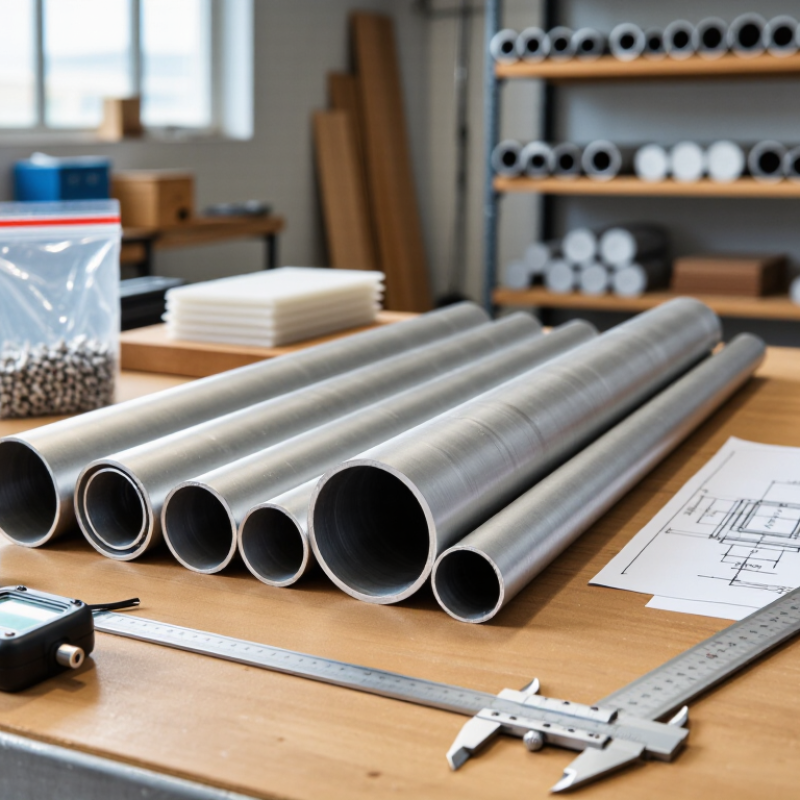
Aluminum extrusion tube profiles can look uniform while varying enough to cause assembly problems. Check the outer diameter, inner diameter, wall thickness, and cut length against the drawing. Measure more than one point along each tube; extrusion or cutting can create local variation. A digital caliper helps with accessible dimensions, while a suitable bore gauge can check internal diameter. Keep measurement tools calibrated.

Tips: Confirm how tolerances are stated before comparing parts. A diameter tolerance is not the same as a straightness or squareness tolerance. Ask for clear limits on straightness, twist, and end cuts when the tube must slide into a frame or meet another component. For critical fits, request inspection data tied to the specified drawing revision.

It is tempting to focus only on nominal dimensions. That shortcut can mislead. Check profile accuracy across the full length, especially near ends and connection points. Inspect a sample for dents, bowing, and uneven walls under good lighting. If a dimension is unclear, resolve it before ordering; vague drawings leave room for avoidable rework. A small mismatch can matter. Conversely, tighter tolerances may add cost without improving function, so identify which surfaces truly control fit.

Check Surface Finishes, Fabrication Options, and Quality Standards

A smooth finish is useful, but it should not hide waviness, scratches, or uneven color. Inspect several profiles under bright, angled light, not only in a product photo. For anodized or painted surfaces, ask about coating thickness, color consistency, and how edges are protected during handling. Small marks matter.

Confirm fabrication options before choosing a profile. Can the supplier cut, drill, tap, or machine it to your drawing? Ask for tolerances and check whether machining exposes uncoated areas. A cut sample can reveal burrs, rough edges, and fit problems that a catalog image will miss. Measure it yourself. It takes little time.

Quality checks should cover alloy and temper, dimensions, straightness, and finish requirements. Request material documentation and inspection records for the production batch, then compare them with your drawing. It is easy to overvalue a flawless sample; production variation can still occur. Ask how nonconforming pieces are identified and what inspection happens before shipment. A recent batch sample helps.

10 Tips for Buying Aluminum Extrusion Tube Profiles - Check Surface Finishes, Fabrication Options, and Quality Standards

Tip What to Check Why It Matters Practical Buying Guidance
1 Alloy and temper Alloy composition and temper influence strength, formability, corrosion resistance, and suitability for machining or welding. Specify the required alloy and temper on the drawing or purchase specification. Common extrusion alloys include 6061 and 6063, but their properties and typical uses differ.
2 Profile dimensions and tolerances Outside dimensions, wall thickness, straightness, and corner geometry affect assembly fit and structural performance. Provide a dimensioned cross-section and state critical tolerances. Confirm which standard and tolerance class apply; requirements depend on the profile, alloy, and dimensions.
3 Surface finish and appearance Visible marks, die lines, scratches, and color variation may affect appearance or later finishing. Define acceptable appearance, inspection conditions, and whether the tube will be anodized, painted, or left mill-finished. Request representative samples for visible applications.
4 Protective finish requirements Anodizing and paint systems can improve surface protection and change the final appearance and dimensions. Specify the finish type, color, coverage, and applicable performance requirements. For anodizing, ISO 7599 provides a framework for decorative and protective anodic oxidation coatings.
5 Fabrication options Cutting, drilling, punching, bending, and machining can affect lead time, cost, and dimensional accuracy. Ask which operations are available and provide hole locations, cut lengths, edge requirements, and allowable burrs. Confirm whether fabrication occurs before or after finishing.
6 Joining and assembly method Welding, mechanical fastening, and adhesive bonding place different demands on the alloy, temper, and joint design. Tell the supplier how the profile will be joined. Review weldability and any strength changes in heat-affected areas with a qualified design or welding professional.
7 Applicable quality standard A clearly named product standard makes material and dimensional requirements easier to verify. For aluminum extruded bars, rods, wire, profiles, and tubes in North America, ASTM B221 is a commonly specified standard. Confirm the applicable edition and product scope in the order.
8 Inspection records and traceability Documented checks help verify that delivered material matches the agreed specification and production lot. Agree in advance on required documents, such as material test reports, dimensional inspection results, and lot identification. Match certificates to the supplied material.
9 Length, straightness, and packaging Long profiles can be susceptible to handling damage, bowing, and surface abrasion during storage and transport. State cut-length requirements and packaging expectations. Check how profiles will be supported, separated, and protected, especially when finished surfaces must remain unmarred.
10 Sample approval and production consistency A first-article review can reveal fit, finish, or fabrication issues before a larger order is produced. Approve a representative sample against the drawing and finish criteria. Define the inspection method and acceptance limits before production begins.

Assess Suppliers, Pricing, Lead Times, and Customization Support

A reliable extrusion quote explains more than the price per meter. Ask suppliers to identify the alloy and temper, dimensional tolerances, inspection method, and documentation supplied with each batch. Request evidence of process controls, such as sample inspection records, and confirm whether the supplier can hold critical dimensions across the full order. Ask for evidence.

The USGS estimated global primary aluminum production at about 72 million metric tons in 2024, but that broad figure does not guarantee local capacity or availability (USGS, Mineral Commodity Summaries 2025). Check the supplier’s actual press capacity, finishing options, and workload before setting a delivery date.

Compare quotes line by line: tooling charges, minimum quantities, machining, surface treatment, packaging, and freight can change the apparent bargain. The World Bank’s Commodity Markets data put average aluminum prices at about $2,256 per metric ton in 2023 and $2,419 in 2024. That movement is a useful reminder to ask how long a quote remains valid and what metal-price assumptions it uses; extrusion prices do not track raw aluminum alone.

Small details matter. For custom profiles, send a dimensioned drawing and mark functional surfaces, tolerances, and any holes or cutouts. Ask whether design feedback, sample runs, and die corrections are included. Confirm the sequence for drawing approval, tooling, first-article inspection, and production. A short lead-time promise can hide uncounted approval or finishing time.

I would still compare the schedule against a real sample plan, not just the sales estimate.