What Are the 2026 Best Extruded Aluminum Profiles?
Choosing the 2026 best Extruded Aluminum Profiles requires more than comparing catalog prices or surface finishes. Engineers must examine alloy strength, dimensional accuracy, corrosion resistance, thermal performance, and manufacturing consistency. The right profile should fit its application, not merely look impressive on a specification sheet.
Performance matters. A window frame may need narrow sightlines and reliable weather sealing. A solar mounting rail may require stable tolerances, strong load support, and clean installation points. Industrial enclosures demand predictable dimensions, smooth edges, and dependable machining results. Experienced buyers also review temper conditions, coating methods, recycled content, and supplier quality controls before making a decision.
This guide evaluates leading profile options through practical engineering criteria and verified technical information. It considers common alloys such as 6063 and 6061, while recognizing that alloy selection depends on load, form complexity, and operating conditions. Independent testing, mill certificates, inspection records, and application feedback can strengthen a supplier’s claims. Yet no ranking is completely universal. A profile that performs well in a lightweight partition may fail to meet the demands of a heavy machine frame. That limitation deserves attention. Market data may also change during 2026, and some product comparisons remain imperfect when suppliers publish different testing methods. Readers should therefore treat the findings as a careful starting point, then confirm specifications with qualified manufacturers and project engineers.
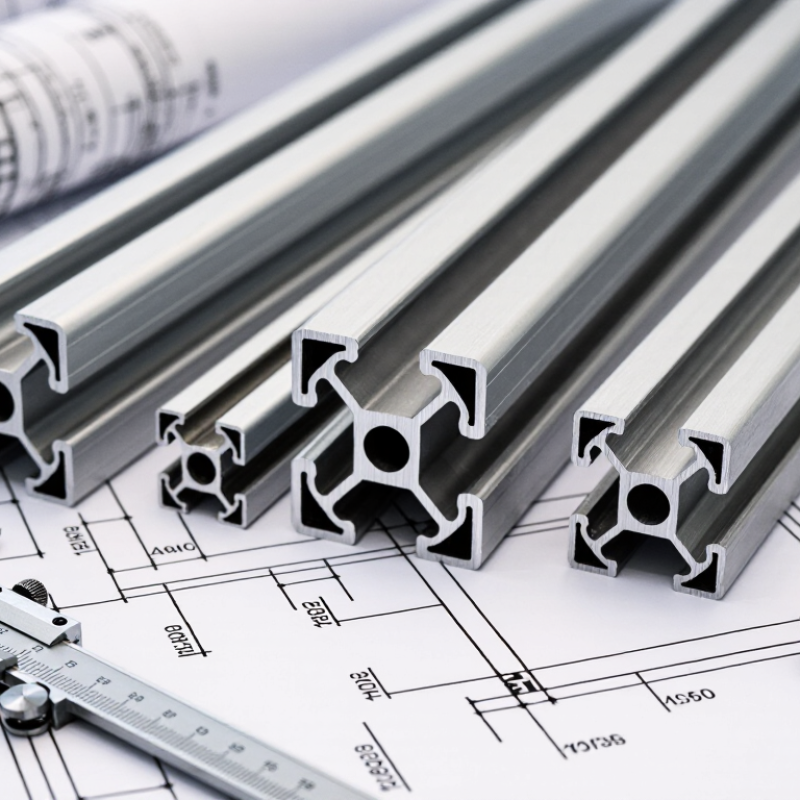
What Defines a High-Quality Extruded Aluminum Profile in 2026?
What defines a high-quality extruded aluminum profile in 2026?
It begins with controlled alloy chemistry and repeatable extrusion practice. A reliable mill checks billet temperature, die wear, press speed, and cooling conditions. These details shape strength, straightness, and surface consistency.
In practical inspection, measure wall thickness at several points, not just one convenient edge. Small variations can affect assembly fit, drainage, and load performance.
Quality also depends on the intended application.
A window frame needs tight tolerances and clean corners. A heat sink needs thin fins, open channels, and stable thermal contact. Structural sections require verified mechanical properties, accurate cutting, and dependable joining surfaces.
Look for inspection records, batch traceability, corrosion testing, and clear tolerance data. A professional supplier should explain these results plainly, without hiding behind attractive photographs.
Surface appearance matters, but it is not proof of quality.
Anodizing or powder coating should be uniform, well bonded, and tested after handling. Scratches around drilled holes often reveal weak process control.
No profile is perfect. Even experienced teams can overlook distortion after cutting or changes caused by storage.
Review samples under real lighting, test a complete assembly, and question any specification that seems unusually vague.
Better decisions come from measured evidence, not confident promises.
Which Aluminum Alloys Suit Different Profile Applications?
The best extruded aluminum profile depends on load, finish, corrosion exposure, and production limits. Alloy selection is never one-size-fits-all.
For architectural frames, 6063-T5 remains a practical choice. The Aluminum Association’s Aluminum Standards and Data 2024 lists approximately 110 MPa minimum yield strength for this temper. It also offers smooth surfaces and reliable anodizing performance. Window frames, doors, lighting channels, and interior rails often benefit from this balance. 6060 can suit lighter decorative sections, although its strength margin is smaller. That trade-off is easy to overlook.
For structural profiles, 6061-T6 provides a stronger option, with approximately 240 MPa minimum yield strength in the same reference. It suits machine frames, transport components, brackets, and load-bearing assemblies. Alloy 6082-T6 is also widely considered for heavier European applications, with strong mechanical performance and good machinability. However, complex shapes can become more difficult and expensive to extrude. Small design changes matter.
Aerospace-style strength may suggest 7075, but extrusion complexity, corrosion sensitivity, and limited formability can weaken its practical value. The European Aluminium material guidance also stresses that temper, wall thickness, and processing affect final performance. Therefore, an excellent alloy can still fail through poor geometry, uneven cooling, or unsuitable joining. Real projects need testing, not assumptions.
How Are Extruded Aluminum Profiles Manufactured and Finished?
The best extruded aluminum profiles in 2026 begin with controlled material selection.
Alloy choice affects strength, corrosion resistance, surface quality, and machining behavior. Manufacturers heat aluminum billets until they become plastic, but not liquid. A hydraulic ram then pushes the billet through a precision steel die. The opening shapes the profile continuously. Small temperature changes can alter wall thickness.
Quality depends on more than the extrusion press.
After leaving the die, the profile is rapidly cooled and stretched to correct distortion. It may then receive artificial aging, which improves hardness and dimensional stability. Technicians check straightness, surface marks, dimensions, and alloy condition. In practical production, tiny die scratches sometimes appear. They require adjustment, not optimistic inspection notes.
Finishing determines how the profile performs in real environments.
A mill finish preserves the natural metallic appearance and often costs less. Anodizing creates a harder oxide layer, improving wear and corrosion resistance. Powder coating adds color and a thicker protective surface. Before finishing, profiles must be cleaned carefully. Oil, dust, or uneven pretreatment can cause stains and weak adhesion. I have seen attractive samples fail after outdoor exposure because drainage was ignored. Designers should also inspect corners, holes, and cut ends, where moisture can remain. Reliable suppliers document process temperatures, coating thickness, hardness, and inspection results for each production batch.
How Should the Best 2026 Profiles Be Compared and Selected?
In 2026, the best extruded aluminum profile is not simply the lightest or strongest option. It must match the load, environment, machining plan, and service life of the project. Start with the alloy and temper, then verify tensile strength, yield strength, and elongation in current test documents. Fit comes first. A 6063-T6 profile may suit a clean interior frame, while a higher-strength series may support a loaded structure. That choice should follow calculations, not sales language.
Compare profiles by section geometry, wall thickness, straightness, and dimensional tolerance. A narrow rib can reduce weight, but it may twist during cutting or vibrate after installation. Ask for mill certificates, inspection records, surface-treatment thickness, and sample measurements from several points. Do not judge finish from one bright sample. Check corners, cut ends, holes, and coating consistency under ordinary light. In humid or coastal locations, review corrosion data and isolation details between aluminum and dissimilar metals. Also compare recycled content, energy data, and traceability records when sustainability matters. Use applicable ASTM, EN, or project standards for acceptance criteria.
For procurement, score each candidate against a written matrix: performance, tolerance, fabrication waste, lead time, price, and documented quality history. Request a short production sample before approving a large order. Measure it with calipers, inspect bow with a straightedge, and test assembly using actual fasteners. Shop-floor checks often reveal issues that catalogs hide. A slot can be slightly undersized, creating loose joints or forcing rework. That mistake is avoidable, but not every risk fits a spreadsheet. Recheck assumptions whenever drawings, tooling, or installation conditions change.
What Are the 2026 Best Extruded Aluminum Profiles?
How should the best profiles be compared and selected? Mechanical strength, corrosion resistance, weight, and extrusion suitability should be evaluated together rather than choosing a single universal “best” alloy.
The chart compares commonly extruded aluminum alloys using typical minimum tensile and yield strength values for heat-treated products. 6063-T5 is widely selected for architectural and general-purpose profiles because of its excellent extrudability and surface finish. 6061-T6, 6005A-T6, and 6082-T6 provide higher structural strength, with the final choice depending on section thickness, corrosion exposure, joining method, surface treatment, and applicable EN or ASTM requirements. Actual certified values vary by product form, temper, wall thickness, and standard.
Reference basis: typical minimum property ranges reported in EN 755, EN 573, ASTM B221, and aluminum alloy technical data sheets. Values are shown in MPa.








 wechat